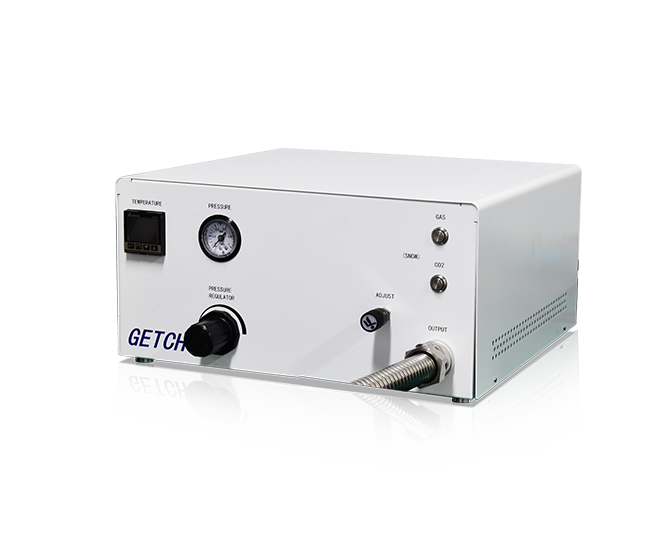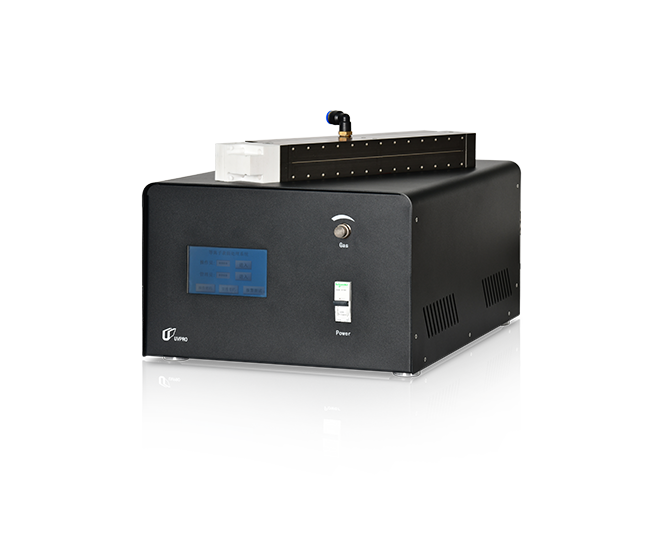
UV System
Industry applications
UV curing technology has become increasingly significant in the inkjet printing industry due to its ability to quickly cure inks and coatings, improving both speed and efficiency in the printing process. This technology uses ultraviolet (UV) light to initiate a chemical reaction that hardens or cures the ink as it is printed onto the substrate, offering numerous advantages over traditional drying methods.
Here are some main applications of UV curing in the inkjet printing industry:
 1. Fast Curing of Inks
UV curing is widely used in inkjet printing to cure inks immediately after they are deposited on the printing substrate. Unlike conventional inks that rely on air drying or heat to evaporate solvents, UV-curable inks are instantly hardened by exposure to UV light, enabling faster production times and reducing the risk of smudging or color distortion.
2. Printing on a Variety of
Substrates
One of the key benefits of UV-curable inks in inkjet printing is their ability to adhere to a wide range of substrates, including plastics, metals, glass, ceramics, and textiles. UV curing ensures strong adhesion to these materials, even those with non-porous or challenging surfaces, which is often difficult with traditional solvent-based inks.
3. High-Quality and Durable
Prints
UV-cured inkjet prints are known for their superior quality and durability. The curing process enhances the print’s resistance to scratches, fading, and chemicals, making it ideal for applications where the print is exposed to harsh conditions, such as outdoor signage, labels, and packaging.
4. Eco-Friendly
Printing
UV curing is more environmentally friendly compared to traditional ink drying methods. UV-curable inks contain little to no volatile organic compounds (VOCs), which are harmful to both the environment and human health. As UV curing does not require heat, it also reduces energy consumption during the printing process.
5. Printing on 3D
Objects
UV curing technology is often used in the printing of 3D objects in industries such as manufacturing and prototyping. Inkjet printers equipped with UV curing capabilities can print directly onto three-dimensional surfaces, allowing for detailed and durable prints without the need for additional curing steps.
6. Enhanced Print Speed and
Efficiency
UV curing significantly accelerates the printing process compared to traditional drying methods. With immediate curing, UV inkjet printers can print at high speeds, making them ideal for high-volume production environments, such as commercial printing, packaging, and industrial applications.
7. Specialty
Applications
In addition to general printing, UV curing is also used in specialty applications such as security printing, where UV inks can be used to print invisible or covert designs that can only be revealed under UV light. This adds an extra layer of security for printed materials like banknotes, identification cards, and labels.
In summary, UV curing technology has transformed the inkjet printing industry by offering faster, more efficient, and environmentally friendly printing solutions. It provides high-quality, durable prints on a wide range of substrates and is used in a variety of applications, from packaging to security printing, making it an essential technology in modern printing.
Product Recommendations