1. Cleaning Fingerprints and Oil
During the process of laying or welding, fingerprints and oil stains are often left on the surface of the solar
cells due to hand contact. Since the surface of the cells has a fine texture, cleaning can be difficult. These oil
stains hinder the cell’s ability to absorb and utilize light, reducing the overall efficiency of the module.
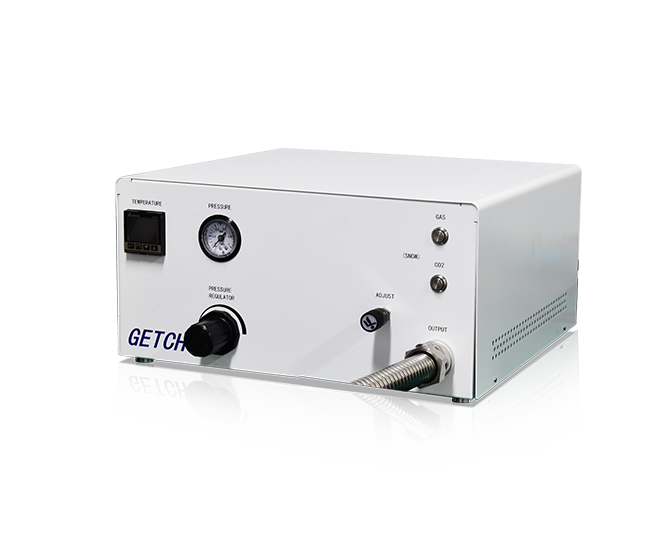
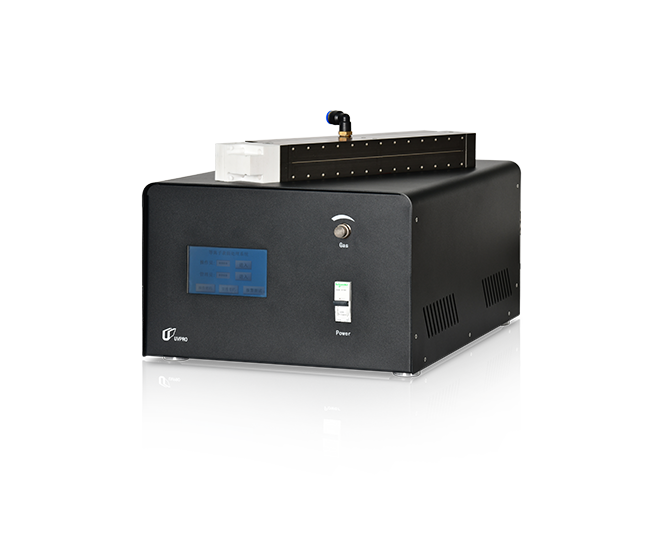
Low-temperature plasma works by ionizing the gas to generate high-speed electron beams (which appear as low
temperature at the macroscopic level). These electron beams are then blown across the surface by an axial fan,
effectively removing oil, fingerprints, and other contaminants.
2. Textured Surface
To improve light absorption and utilization, the surface of polycrystalline silicon solar cells is textured to
create a worm-like structure. This is typically done by etching the surface with a mixture of nitric acid and
hydrofluoric acid in a specific ratio, resulting in a porous silicon layer. Porous silicon helps trap impurities and
extends the life of photogenerated carriers, while also reducing reflectivity. However, this porous structure can be
loose and unstable, leading to higher resistance and a greater rate of surface recombination. Low-temperature plasma
treatment helps refine and organize the surface texture while stabilizing the structure and minimizing recombination
centers.
3. Thermal Etching
During the photovoltaic manufacturing process, phosphorus diffuses into the surface and edges of the cell,
unintentionally doping the material. As phosphorus diffuses, photogenerated electrons move from the front to the
back of the cell, which can cause short-circuiting of the PN junction and a reduction in parallel resistance. This
decrease in parallel resistance affects the open-circuit voltage, lowering it, though it does not significantly
impact the short-circuit current. The cell surface also forms phosphosilicate glass (PSG), which absorbs moisture
from the air, leading to a drop in current and power efficiency. Low-temperature plasma treatment can effectively
sweep away excess phosphorus from the surface, removing PSG and improving performance.
4. Surface Passivation
The cutting process in solar cell production often creates dangling bonds on the surface. These bonds can trap
photogenerated carriers, limiting the production of photocurrent, which is a significant loss of energy.
Low-temperature plasma can ionize hydrogen gas, and the hydrogen ions passivate the surface by repairing these
dangling bonds, helping the silicon atoms return to a stable structure.
5. Reducing the Impact of Dead
Layers
In the diffusion region, phosphorus atoms occupy interstitial positions in the crystal lattice, which creates
lattice defects. Additionally, the mismatch in atomic radius between phosphorus and silicon leads to further
defects. As a result, the lifetime of minority carriers in the surface layer of the silicon cell is very short, and
the carriers generated by the absorption of short-wavelength photons contribute little to the cell’s photocurrent.
This surface layer is often referred to as the "dead layer." While the presence of the dead layer is unavoidable,
its impact can be reduced. Low-temperature plasma treatment helps to evenly distribute the phosphorus atoms on the
surface and encourages their proper placement, minimizing the effect of the dead layer.